

New Member Champions Standards as Kenya’s Techwin Joins SASSDA
Sassda is pleased to announce that Kenya-based stainless-steel fabricator Techwin has joined the association as a new member. With nearly two decades of experience, the company has grown alongside East Africa’s expanding agri-processing, food manufacturing and pharmaceutical sectors and operates at the intersection of stainless-steel fabrication, process engineering and industrial food systems.
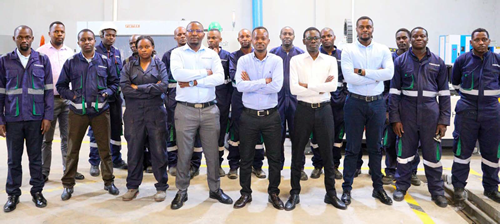
The company designs, manufactures and integrates equipment for hygienic, regulated production environments, focusing on value-added fabrication with a product range that includes dairy processing machinery, food and beverage systems, storage and processing tanks, brewery equipment,
cosmetic and pharmaceutical vessels, as well as customised stainless-steel solutions for industrial clients.
Raw materials are sourced through established regional and international supply chains. Grade selection is guided by performance requirements, traceability and compliance with food-grade and pharmaceutical standards. This approach allows the company to maintain material availability while meeting strict regulatory demands, particularly in sectors where product integrity is critical.
Techwin’s membership comes at a time when technical standards, skills development and cross-border alignment are becoming increasingly important to African manufacturers. CEO Ken Mbiuki comments, “Our growth over nearly two decades has been built on disciplined fabrication, strict hygienic design principles and long-term partnerships with clients operating in regulated industries.
“In food and pharmaceutical processing, where there is little margin for error, manufacturing requires consistent process control, skilled welding and rigorous documentation By joining Sassda, we aim to strengthen that foundation and align with recognised stainless steel and manufacturing standards, technical benchmarking and structured training as our projects become more complex and increasingly regional.”
Large-scale project underscores integration demands
Demand for hygienic processing equipment continues to rise across East Africa, driven by expansion in agri-processing, food and beverage manufacturing, dairy value addition and pharmaceuticals. As project sizes increase and system integration becomes more complex, maintaining consistent technical standards remains a challenge for fabricators.
A recent large-scale contract undertaken by Techwin illustrated the level of coordination required. The company designed and manufactured integrated processing, cleaning-in-place (CIP) and storage systems for a high-volume food-processing operation in Kenya. The project required strict hygienic design, precise temperature control, compatibility with food grade materials and seamless integration into an
existing plant environment.
Mbiuki explains, “Beyond fabrication, the contract demanded close coordination between design, production and installation teams, as well as ongoing engagement with the client to ensure operational realities were reflected in the final equipment configuration. Integration with legacy systems and alignment with production schedules added further complexity.”
Key challenges included tight delivery timelines, coordination across multiple technical disciplines and maintaining uniform quality across large fabricated components.
Lessons from the project have since been incorporated into internal workflows, with greater emphasis on structured planning, staged quality checks and cross-functional reviews. As system capacities increase, these controls are essential to maintaining consistent, repeatable outcomes.
Regional demand and localisation
Looking ahead, Techwin identifies agri-processing, dairy value addition, food and beverage manufacturing, and pharmaceuticals as key growth areas in the East African region. Investment in post-harvest management, food security and local value addition is driving demand for stainless steel processing infrastructure that meets both operational and regulatory requirements.
Across the continent, localisation is also gaining momentum. “Manufacturers are seeking fit-for purpose equipment that can operate efficiently in environments where utilities such as power and water may be constrained, and where technical skills availability varies,” says Mbiuki. “This creates opportunities for regional fabricators who can adapt designs to local conditions while maintaining hygienic and performance standards.”
Industry alignment through Sassda membership
Against this backdrop, Techwin’s decision to join Sassda reflects a strategic focus on formal industry alignment. Membership will expand engagement with the broader stainless-steel community, particularly in areas such as skills development, technical benchmarking and collaboration.
As projects become more complex and regionally oriented, exposure to recognised standards and evolving best practice is increasingly valuable. Membership also provides a platform for cross-border knowledge exchange, an important consideration as African manufacturers pursue regional contracts.
Structured training has been identified as a priority. Stainless steel fabrication for hygienic and regulated industries depends heavily on skill, technique and procedural discipline. Sassda’s training and technical programmes are therefore viewed as practical mechanisms to strengthen capability, standardise fabrication approaches and reinforce a quality-focused culture.
Over time, this investment in skills is expected to enhance productivity, reduce rework and improve competitiveness in both local and regional markets.