

Innovation, Accountability & the Future of Stainless Steel
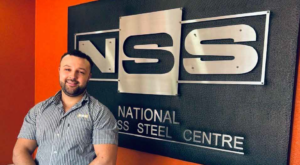 National Stainless Steel Centre (NSSC) Technical Sales and Projects Engineer Bjon Frljak represents a
new generation of industrial leadership in South Africa. With a mechanical engineering degree from
the University of Pretoria and an MBA nearing completion at Wdits University, he combines technical
depth with commercial awareness. Having grown up around the business and gained hands-on
experience from an early age, Frljak understands the factory floor as well as the boardroom. In this Q&A, he shares insights on industry pressures, evolving customer expectations, and why accountability and investment in young talent will shape the future of stainless steel.
Please share some background on where you come from, your schooling and tertiary education, and where you began your professional career?
I began my schooling at St Benedict’s College in Johannesburg and later completed my tertiary studies at the University of Pretoria, where I earned a Bachelor of Mechanical Engineering (BEng Mech). I am currently in the final year of my MBA at Wits University.
After completing my undergraduate degree in 2020, I joined NSSC full time. That said, my involvement in the business started much earlier. From middle school, I spent school holidays gaining hands-on experience in different areas of our steel processing facilities. During that time, I developed a practical understanding of how the MRP and ERP systems support daily operations, as well as how materials move through the full process from start to finish.
Looking back, family has always played a central role in my life. Growing up in an entrepreneurial environment, where decisions are made daily and accountability matters, has shaped how I approach both work and responsibility.
With both of my parents running their own businesses, I was exposed to this world from a young age. It taught me perseverance and the importance of working consistently toward long-term goals. I’ve seen the business grow from humble beginnings, and today we continue building on that foundation alongside our partners and team.
What is your current role at NSSC, and how would you describe a typical day in your position?
I currently work as a Technical Sales and Projects Engineer at NSSC. I work closely with internal sales, quality control, detailing, and planning teams. I focus on daily sales, processing, expediting orders, and liaising with customers, while also looking for opportunities to strengthen and grow our customer base.
From the point an order is confirmed through to final delivery, I stay involved to ensure timelines are met and technical requirements are clearly understood. Providing technical guidance is an important part of what I do. With an engineering background and hands-on exposure to manufacturing and processing, I often engage directly with engineers and technical teams, which makes for practical and productive discussions.
It’s a busy environment. We aim to maintain strong service levels, consistent quality, and competitive pricing across a wide range of material grades. We value the longstanding relationships we’ve built over more than 25 years and appreciate the continued support of our customers, which allows us to grow and contribute to the broader stainless steel industry.
Looking back at your career to date, which key roles, projects, or experiences have challenged you the most and helped shape your skills, leadership approach, and professional growth?
Growth, in my view, comes with accountability. In our environment, delivering competitive pricing, reliable service, and on-time turnaround requires ownership and attention to detail.
We work across sectors such as mining, petroleum, oil and gas, power generation, and the private sector. Each industry brings different requirements and pressures, so every day presents new challenges. Rather than one specific project standing out, it’s the consistent daily problem-solving in a fast-paced environment that has shaped my development the most.
Leadership and personal growth are closely connected. I believe in maintaining a positive, growth focused mindset and being open to change. Developing self-awareness and empathy is an ongoing process. In a high-pressure industrial setting, tensions can arise, but working through conflict constructively often strengthens relationships within the team.
What would you say are the biggest lessons you have learnt in your personal and your professional life?
I’m still learning, especially when it comes to the topic of work-life balance. Given that I’m currently doing my MBA, it’s a discussion that comes up often! That said, I don’t think balance is something you always get perfectly right. There are seasons where one area of life demands more attention than another.
What makes it sustainable is having a strong support system. I’m fortunate to have mentors and family who support me through both the challenges and successes that come with daily life. That foundation makes a real difference.
From your perspective at NSSC, how is the stainless-steel value chain in South Africa evolving, particularly in terms of processing capabilities, project timelines and quality expectations?
Both locally and internationally, processing technology continues to advance quickly. International exhibitions show just how rapidly machine capabilities and automation are evolving. Locally, investment in modern equipment has improved efficiency, precision, and turnaround times.
Energy reliability has also become a key focus. Investment in alternative energy solutions, such as largescale solar systems with battery storage, allows operations to continue during power disruptions and improves overall consistency.
In terms of customer expectations, the fundamentals haven’t changed much. Customers want quality, good service, competitive pricing, and honest communication around timelines and capabilities. What has changed is the broader economic pressure, which means businesses need to operate leaner and more efficiently than ever before.
In your experience, how important is technical knowledge, such as correct grade selection, fabrication practices and corrosion considerations, in ensuring long-term project success?
Technical knowledge is critical in our industry. Correct grade selection, understanding processing practices, and technical requirements such as corrosion protection all play a major role in ensuring long-term project success. Without that foundation, issues can arise later that could have been avoided.
Ongoing training and skills development are therefore essential. Structured programmes, practical exposure, and continuous learning allow staff to make informed decisions and execute processes correctly. More broadly, I believe we need to continue investing in young professionals and artisans in South Africa to strengthen the future of our local stainless steel and manufacturing industries.
At a broader industry level, what do you see as the biggest challenges facing the South African stainless steel sector at present? What practical or innovative approaches could help address these challenges?
The sector is facing limited domestic growth, high electricity costs, infrastructure constraints, and strong import competition from subsidised markets. These pressures make it challenging for local manufacturers to compete.
Addressing this will require closer collaboration between industry stakeholders and government, as well as a stronger emphasis on local procurement. Raising awareness of local manufacturing capabilities through industry bodies and digital platforms can also help. South Africa has the skills and technology; the opportunity lies in coordination, investment, and long-term commitment.
What developments or innovations in stainless steel are you most encouraged by right now? Which industries or sectors do you believe hold the greatest future potential for stainless steel applications?
We’ve seen steady movement in sectors such as water and sanitation, power, solar, and infrastructure, through both government and private initiatives. These areas offer meaningful long-term potential for stainless steel applications.
Stronger GDP growth would have a significant positive impact on employment and industrial activity across the board. Despite current challenges, I believe an entrepreneurial mindset requires optimism and adaptability. With the right focus and investment, there is real potential for continued growth in the stainless steel sector.