

Zimbabwe’s Industrial Reset: New Growth Frontier for Stainless Steel
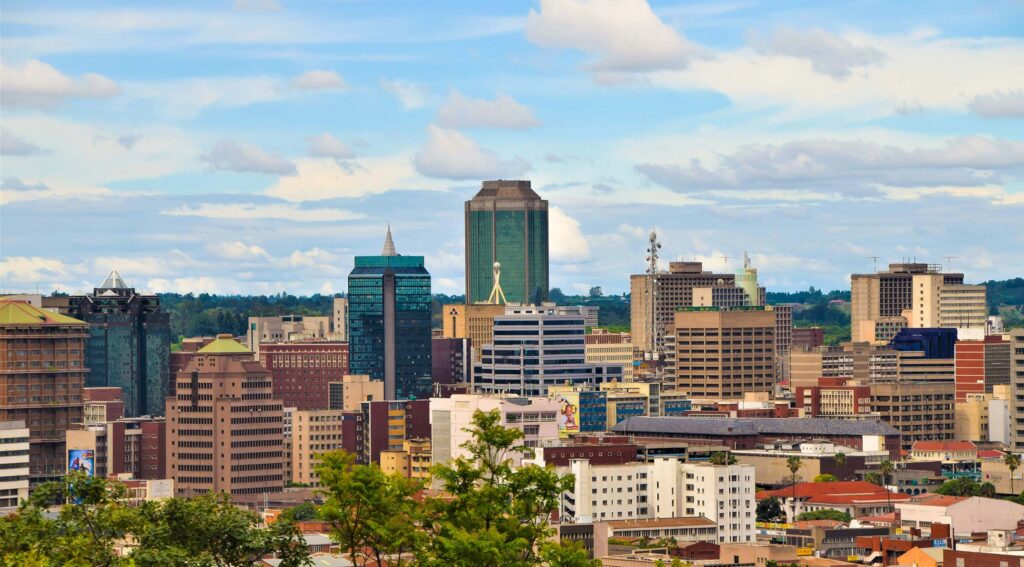 Zimbabwe’s transition from raw-material exporter to regional processing and manufacturing hub is creating significant opportunities for stainless steel across mineral beneficiation, pharmaceuticals, industrial infrastructure and engineering.
Zimbabwe is entering a potentially transformative phase in its industrial development. Long defined by abundant mineral resources but constrained by economic volatility, the Southern African country is pursuing a more ambitious proposition: processing its raw materials domestically, rebuilding manufacturing capacity and capturing more value before its commodities cross the border.
This industrial pivot could create a particularly promising market for stainless steel. New mineral-processing plants, pharmaceutical facilities, industrial parks and supporting infrastructure will require materials capable of withstanding corrosive chemicals, demanding operating conditions and strict hygiene requirements.
With a population of about 17-million and a strategic position between South Africa, Botswana, Zambia and Mozambique, Zimbabwe offers access to established regional markets and Indian Ocean trade routes. Harare remains its principal commercial centre, while Bulawayo retains a strong industrial and engineering heritage.
The economic backdrop is also becoming more encouraging. The World Bank estimates that gross domestic product expanded by 7.5% in 2025, up from 1.7% in 2024, supported by an agricultural rebound and stronger mining prices. Growth is expected to moderate during 2026, with forecasts generally ranging between 4.5% and 5%, which represents a comparatively strong performance within Southern Africa.
Beneficiation moves to centre stage
Mining remains one of Zimbabwe’s most important economic engines, but the emerging opportunity lies increasingly beyond extraction. The government is using export restrictions, investment incentives and procurement policies to encourage local beneficiation. This is particularly evident in lithium, where about $2-billion has reportedly been invested since 2021. Zimbabwe is Africa’s leading lithium producer and an increasingly important supplier to the global battery value chain.
Prospect Lithium Zimbabwe, a subsidiary of China’s Zhejiang Huayou Cobalt, has developed a lithium sulphate plant representing an investment of $400-million. With capacity exceeding 50 000 t/y, the plant marks a significant step from exporting concentrate towards producing higher value intermediate battery materials.
Further investment is taking shape at Kamativi in Matabeleland North. Kamativi Mining Company, working with China’s Yahua Group, is developing a lithium sulphate facility incorporating a smelter and sulphuric acid plant.
More than $200-million is being invested in the project, which is designed to produce 75 000 t/y of lithium sulphate and is expected to be commissioned in 2027.
These projects demonstrate the scale of the industrial ecosystem developing around battery metals, and the potential stainless steel demand attached to it. Lithium processing involves corrosive chemicals, elevated temperatures and demanding operating environments in which material selection is critical.
Opportunities extend to stainless steel tanks, process vessels, piping, pumps, valves, heat exchangers, ducting and acid-handling systems, as well as water-treatment equipment, laboratories and specialised maintenance. Higher-alloyed stainless steels may also be required in the most aggressive chemical environments.
Zimbabwe plans to prohibit exports of unprocessed lithium concentrate from January 2027, placing pressure on developers to bring sufficient domestic processing capacity on line. This creates urgency for stainless steel stockists, fabricators, engineering companies and technical specialists able to support accelerated project delivery.
Steel returns to the industrial agenda
Zimbabwe’s industrial ambitions are also being reshaped by the Manhize steel project in the Midlands province. The $1.5-billion Dinson Iron and Steel Company development has begun producing reinforcing steel and is intended to become the nucleus of a wider mining, processing, fabrication and export industry.
The plant has strategic significance for a country seeking to reduce a steel import bill estimated at $1.9-billion. Greater domestic carbon-steel production could support infrastructure, construction and mining, while broader industrial expansion should stimulate demand for fabricated stainless steel equipment and corrosion-resistant components.
There is also scope for regional suppliers to provide technical guidance on grade selection, welding, fabrication, installation and lifecycle costing. Specifying the correct stainless steel grade at the design stage will be essential to avoiding premature corrosion and costly plant downtime.
Manufacturing beyond mining
The opportunity is not confined to metals. Zimbabwe imports pharmaceutical products worth an estimated $300-million annually, creating a strong commercial case for domestic production.
The number of operational pharmaceutical manufacturers has reportedly risen from nine to 14, supported by more than $70-million in investment.
Demand is growing for sterile injectable medicines, vials, ampoules and other essential products.
Pharmaceutical production represents an important higher-value stainless steel market. Hygienic manufacturing requires smooth, cleanable and corrosion-resistant surfaces, creating demand for stainless steel process vessels, purified water systems, clean-room equipment, piping, mixing tanks, heat exchangers and packaging lines.
Similar opportunities could emerge through growth in food and beverage processing, agricultural value addition and water infrastructure. In each case, stainless steel offers durability, hygienic performance and lower maintenance requirements, an important advantage in facilities where equipment reliability and lifecycle costs are critical.
Meanwhile, Sunway City, on the outskirts of Harare, is being developed as an integrated industrial, commercial and residential precinct. Its factory shells, common services and planned road, rail and communications links are intended to lower barriers for incoming manufacturers.
Opportunity tempered by risk
Zimbabwe’s industrial revival is not without obstacles. Energy shortages, constrained infrastructure, foreign currency availability, policy uncertainty and a public debt burden exceeding $23-billion continue to affect investment decisions. Reliable project evaluation, appropriate risk sharing and strong local partnerships remain essential.
Yet the direction of travel is difficult to ignore. Zimbabwe is attempting to turn its mineral endowment into processing capacity, factories, skilled employment and export-ready products.
For the stainless steel sector, this transition represents more than an opportunity to supply material. It creates demand for fabrication expertise, welding skills, quality assurance, material-selection advice and long-term plant support.
Zimbabwe is no longer simply a source of raw materials. It is becoming a market in which the next layer of industrial value, much of it dependent on corrosion-resistant, durable and hygienic stainless steel, is waiting to be built.