

R1bn food-processing investment could unlock 2000 t of stainless steel demand
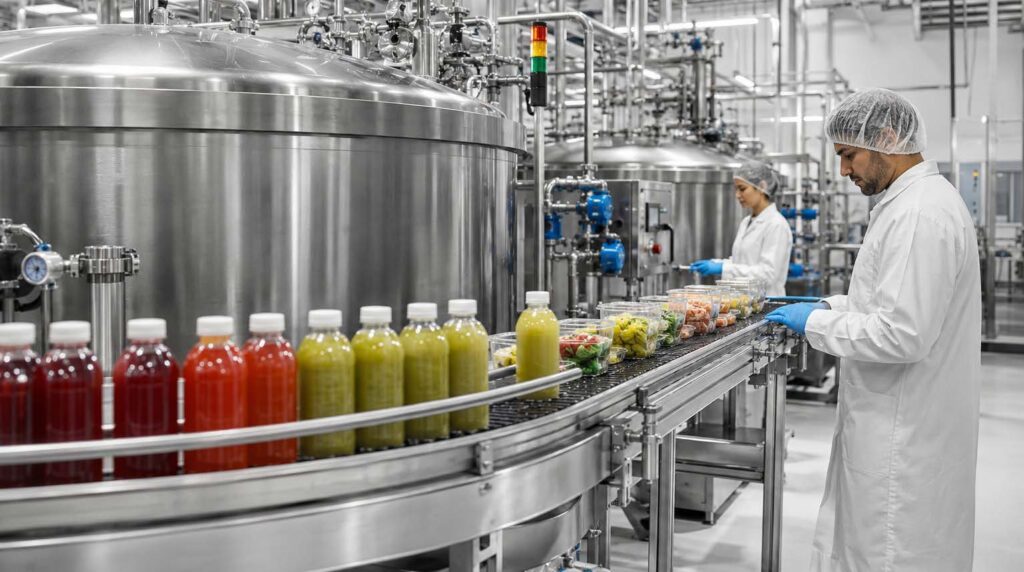
From dairy tanks and hygienic piping to bottling and packaging lines, investment in South Africa’s food and beverage sector could generate significant new demand across the stainless steel value chain…
Consider a hypothetical R1-billion investment programme in South Africa’s food and beverage processing sector, which could generate demand for an 800 t to 2 000 t of stainless steel, while creating opportunities for local fabricators, equipment manufacturers, service centres, engineers, installers and maintenance contractors.
The precise impact would depend on the mix of projects involved. A capital programme dominated by new dairy, brewery or beverage processing facilities would be considerably more stainless steel-intensive than an investment focused mainly on buildings, warehousing or distribution infrastructure. Nevertheless, the scenario illustrates the substantial industrial multiplier that can be created when investment in agriculture and food production is deliberately linked to local procurement and manufacturing.
A R1-billion programme could include new dairy processing facilities, expanded beverage and bottling lines, upgraded food factories, cold-chain infrastructure and additional agri-processing capacity serving domestic and African markets. While this would primarily be viewed as an investment in food production, a significant proportion of the resulting expenditure would flow into the engineering and stainless steel sectors.
Calculating the stainless steel opportunity
Depending on the type and scale of the facilities, processing equipment, storage systems, piping, refrigeration, conveyors, utilities and packaging lines could account for between 25% and 45% of total project expenditure. This would equate to a potential equipment and engineering market of R250-million to R450-million from a R1-billion capital programme.
Not all this expenditure would relate directly to stainless steel. It would also include pumps, motors, control systems, electrical equipment, automation, instrumentation and installation. However, stainless steel would be a central material in the parts of the plant that store, transport, process or come into contact with food and beverages.
On an illustrative basis, such an investment could generate demand for between 800 t and 2 000 t of stainless steel across plate, sheet, coil, tube, pipe, fittings, bar and fabricated components. This range is not a formal forecast and would need to be tested through a dedicated economic impact study. It does, however, demonstrate the scale of demand that could be created if a meaningful portion of the equipment was designed and manufactured locally.
The value of the opportunity also extends well beyond the basic cost of the metal, as stainless steel gains considerable value as it moves through cutting, forming, welding, machining, polishing, testing, assembly and installation.
Every processing plant starts with stainless steel
Food and beverage manufacturing is one of the most important application markets for stainless steel because of the material’s corrosion resistance, durability, cleanability and suitability for hygienic processing environments.
Stainless steel is used from the point at which raw agricultural products enter a facility until the final packaged goods leave the production line.
Potential applications arising from a R1-billion investment programme could include:
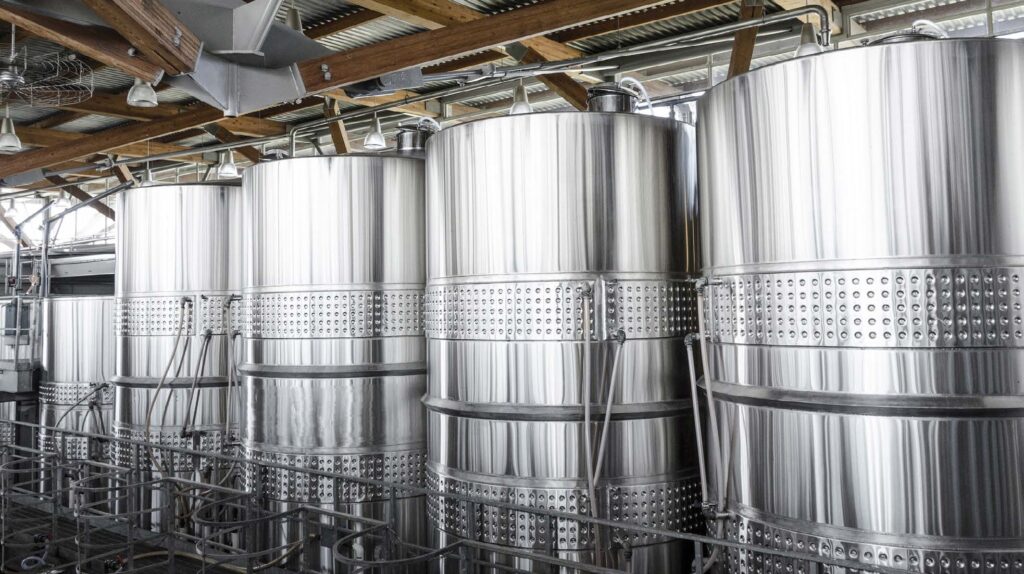
- Raw milk and product storage tanks
- Mixing and blending vessels
- Fermentation tanks and brewery vessels
- Pasteurisers and heat exchangers
- Hygienic process piping and fittings
- Pumps, valves and manifolds
- Silos, hoppers and chutes
- Conveyor and product-handling systems
- Refrigeration and cooling equipment
- Bottling, canning and filling lines
- Food preparation tables and work surfaces
- Commercial kitchen equipment
- Washdown and cleaning systems
- Packaging machinery and components
- Platforms, access structures and drainage systems
Grades 304 and 304L would typically account for a significant proportion of general food-processing applications. More demanding environments involving high chloride levels, aggressive cleaning chemicals or corrosive ingredients could require grade 316L or selected duplex grades. Correct material selection would be essential to ensuring that equipment delivers the required hygiene, corrosion performance and service life without unnecessary over-specification.
Localisation determines the real economic benefit.
The strongest business opportunity would arise if investors and project developers sourced a greater proportion of equipment and fabrication locally. South Africa has experienced continued pressure from imported finished equipment and complete processing systems and, while some specialised technologies may still need to be imported, significant scope exists to manufacture tanks, vessels, pipework, conveyors, structural components and supporting equipment domestically.
Local fabrication could include equipment produced under licence or to drawings supplied by international original-equipment manufacturers. It could also encompass the localisation of replacement parts, customised components, skid-mounted systems and complete assemblies. This model would allow South African companies to participate progressively in global supply chains, beginning with components and maintenance work before moving into more complex systems and equipment assembly.
Local procurement would also improve access to replacement parts and technical support, shorten lead times and reduce exposure to international freight costs and exchange-rate volatility. Importing a completed processing system transfers much of its manufacturing value offshore, while local production retains expenditure throughout the domestic value chain, benefiting stainless steel suppliers, processors, fabricators, consumable suppliers, engineering businesses, logistics companies and maintenance contractors.
A high-value employment multiplier
South Africa’s stainless steel sector is predominantly downstream and fabrication-driven. Its employment value therefore lies not only in producing or distributing metal, but also in transforming that metal into technically demanding, high-value products.
Industry estimates indicate that the stainless steel value chain supports about 20 000 to 25 000 direct jobs. It is also considered more employment-intensive per tonne than many conventional carbon steel activities because of the specialised processes involved in fabrication and finishing.
An increase in food-processing investment would create work across a broad range of occupations, including:
- TIG welders and coded welders
- Stainless steel fabricators
- Pipe fitters and mechanical fitters
- CNC machine and laser-cutting operators
- CAD designers and draughtspeople
- Mechanical and process engineers
- Project managers
- Quality-control inspectors
- Food-safety and compliance specialists
- Commissioning and maintenance technicians
The number of jobs created would depend on the percentage of equipment manufactured locally, the duration of the investment programme and whether orders developed into sustained production rather than once-off projects. Even where permanent job creation was limited, a strong project pipeline would help local companies retain critical skills, improve capacity utilisation and provide additional apprenticeship and workplace training opportunities.
Raising South Africa’s technical capability
Food-processing equipment must meet demanding standards relating to surface finish, hygienic design, cleanability, weld quality, traceability and contamination control. A larger domestic project pipeline would therefore encourage investment in higher-level manufacturing capabilities, including automated welding, precision forming, laser cutting, CNC machining, orbital tube welding, non-destructive testing and advanced quality-management systems.
It would also create an incentive for fabricators to develop expertise in hygienic design and international food safety requirements. These capabilities could subsequently be applied in other high-value stainless steel markets, including pharmaceuticals, chemicals, water treatment, brewing, commercial catering and biotechnology.
For Sassda and its members, this reinforces the importance of supporting the industry through technical advice, training, material selection, standards guidance and connections between project developers and capable local suppliers.
Linking food security to export growth
Modern processing infrastructure can help South Africa reduce post-harvest losses, improve product consistency, extend shelf life and increase the value derived from agricultural production. It can also enable food and beverage companies to comply with the hygiene, quality and traceability requirements of export markets.
As processors expand into African and international markets, demand for efficient, reliable and hygienically designed production equipment should grow alongside them. This creates a reinforcing cycle in which increased processing capacity supports exports, exports encourage further investment and new investment stimulates demand for locally produced stainless steel equipment.
South African fabricators that build a track record in the domestic food and beverage sector could also use that expertise to supply processing equipment, components and maintenance services into other African markets.
Turning investment into industrial growth
A R1-billion food and beverage investment programme would not automatically deliver its full potential to the domestic stainless steel sector. The outcome would depend on early engagement with local suppliers, realistic procurement specifications, appropriate material selection and a willingness to separate specialised imported technology from equipment that can be produced competitively in South Africa.
With a coordinated localisation strategy, however, the programme could support an estimated 800 t to 2 000 t of stainless steel demand and create a R250-million to R450-million market for equipment and engineering services.
More importantly, it could strengthen manufacturing SMEs, preserve specialised skills and build South Africa’s capability to supply sophisticated food-processing systems.
Every new dairy, brewery, bottling plant or food factory should therefore be viewed as more than a production facility. It is also a potential industrial development platform capable of generating business throughout the stainless steel value chain.