

Sassda builds data-driven case to defend SA’s hollowware industry
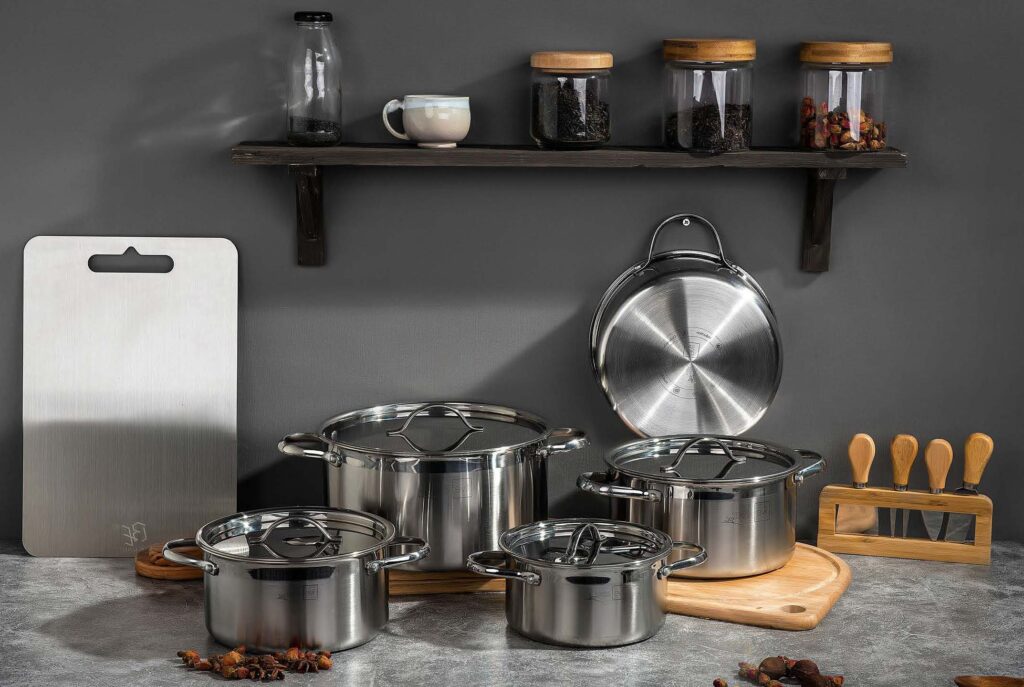
Sassda is undertaking a detailed market and technical analysis of South Africa’s stainless steel hollowware sector as it seeks to establish a stronger, evidence-based case for local manufacturing and action against potentially underpriced and noncompliant imports.
The research brings together import statistics, retail pricing, product specifications, material grades and local manufacturing capability to build a more complete picture of the pressures confronting domestic producers.
Hollowware encompasses everyday stainless steel products such as pots, pans, bowls, serving dishes and cooking utensils. Although these are relatively simple consumer products, the sector represents an important downstream market for stainless steel producers, stockists, fabricators, finishers and other service providers.
Sassda Executive Director Michel Basson says the initiative has moved beyond general concern about cheap imports towards developing the detailed market intelligence needed to support practical intervention.
“Accurate information allows us to generate insights that can make a measurable difference to local industry. The objective is to put Sassda in a position where we can use the available trade and regulatory instruments effectively,” he reports.
Sassda has previously investigated the quality of imported hollowware, including whether products complied with South African Bureau of Standards specifications (SABS) and whether the stainless steel grades claimed by suppliers were being used.
SABS requirements specify grades such as 304 and 430 stainless steel for hollowware sold locally. However, Sassda’s earlier investigations found significant variations in the quality and composition of some imported products, raising questions about durability, corrosion resistance and compliance.
The latest research adds a commercial and economic dimension to this technical work. As part of this, Sassda has been monitoring hollowware import volumes and declared customs values over several years. Import volumes declined for a period but began increasing rapidly following the Covid-19 pandemic, when several South African manufacturers lost market share.
Recent Sassda analysis indicates that hollowware imported from China during 2024 and 2025 dominates other countries of origin, and entered South Africa at average declared customs values of much lower than would be practical for South African producers to compete with.
Far from a level playing field
When these values are assessed against the underlying cost of commonly used stainless steel grades, as well as manufacturing, freight and distribution costs, the disparity raises serious questions about whether local manufacturers are competing on an equitable basis.
The concern is not simply that imported products are cheaper. Sassda is seeking to determine whether certain prices are commercially realistic and whether they may indicate dumping, incorrect customs declarations or the use of materials that do not comply with local specifications.
To strengthen its analysis, Sassda is also conducting detailed retail research. This includes visiting stores, photographing products, recording prices and barcodes, checking stated material grades and converting retail prices into comparable per-kilogram values.
The data is being consolidated and analysed using digital and artificial-intelligence-supported tools, allowing Sassda to compare products, retailers, import values and retail margins across a large dataset.
The intention is to establish a defensible benchmark value for stainless steel hollowware. Goods imported below this benchmark could then be flagged for closer examination by the relevant authorities.
Basson describes the work as a high-level prefeasibility study that can help determine whether greater local production is commercially viable. “If local manufacturers can compete at globally realistic commercial prices but are being displaced by products entering the country at questionable values, targeted trade remedies or tighter enforcement may be more appropriate than general industry support.”
An accountability mechanism
Looking ahead, Sassda plans to use the research to support its engagement with the Department of Trade, Industry and Competition and the International Trade Administration Commission of South Africa (ITAC). The introduction of permit requirements for certain imported steel products could provide an additional mechanism through which suspiciously low-priced hollowware imports can be identified and investigated.
Sassda does not advocate indiscriminate protection across the stainless steel market. Its approach is to support targeted intervention where there is credible evidence of dumping, misdeclaration, substandard material or other anticompetitive practices.
For Sassda members, the relevance extends beyond existing hollowware manufacturers. Reviving the sector would create demand throughout the value chain, including for stainless steel sheet and coil, tooling, forming, welding, polishing, packaging, logistics and technical services.
The association has also been investigating the production capacity of local automotive and other manufacturing facilities that could potentially diversify into hollowware production. This supply-side assessment is now being combined with the consumer and retail research to establish a holistic view of the market.
The result could provide manufacturers and investors with credible information on demand, pricing, production requirements and potential routes to market. “At the back end, we have examined local manufacturing capacity. At the front end, we are now analysing what consumers are buying and paying,” Basson says.
For a sector seeking to rebuild domestic manufacturing capability, Sassda’s hollowware research could offer more than a snapshot of the market. It could provide the factual foundation required to convert localisation ambitions into commercially sustainable production, investment and employment.