

Closing the Loop: Skills, Sustainability & Stainless Steel’s Future
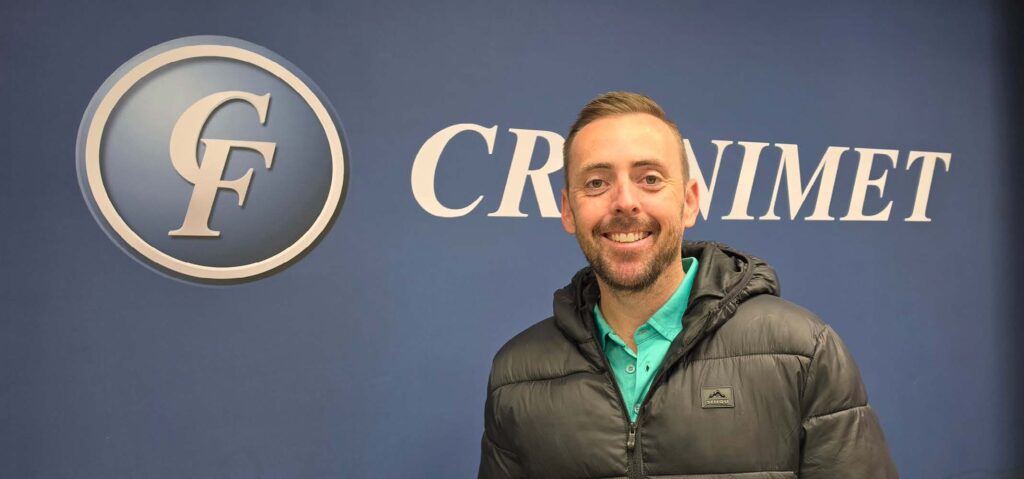
Cronimet Operations Manager Dominic Maguire has built his career from the ground up, combining hands-on materials knowledge with commercial and operational experience. In this profile he outlines his views on circularity, skills development, local manufacturing and the innovations shaping a more resilient future for South Africa’s stainless steel industry…
Please tell us a little about your background, including where you grew up, your education and how your career ultimately led you into the stainless steel industry?
I grew up in Johannesburg and completed my schooling at Trinityhouse. After finishing matric, I took a gap year, during which I started a private cricket coaching business. What began as a small venture grew steadily over the next three years, teaching me valuable lessons in entrepreneurship and managing a business from a young age.
Following my gap year, I moved to Pretoria, where I studied towards a BCom degree through UNISA while also completing a certificate in Business Management. During my second year, I entered the recycling industry, joining a waste management company as a sales representative. I spent my time outside class, calling on businesses, building customer relationships and developing an understanding of the recycling sector and its dynamics.
In 2012, I returned to Johannesburg and joined a leading paper merchant, where I spent the next six years in the paper and print industry. During that time, I progressed through several roles, starting in internal sales before moving into warehouse management and eventually becoming Internal Sales Manager. Working across multiple areas of the business gave me a broad understanding of operations, logistics, customer service and commercial management, providing a strong foundation for the next stage of my career.
In 2018, I joined Cronimet, where I have continued to build on those experiences while developing a deep understanding of the stainless steel recycling and raw materials industry. Each stage of my career has contributed to the practical knowledge, commercial perspective and appreciation for sustainability that continue to shape my approach today.
What have been some of the most significant roles, projects or milestones that have challenged you the most?
Looking back, I attribute much of my practical experience to my time in the paper and print industry. Being involved in virtually every aspect of the business over several years provided me with a solid foundation in operations, customer relationships and commercial decision-making, skills that I continue to build on today.
When I joined Cronimet in 2018, one of the valuable things I did was spend a year in the yard sorting and grading stainless steel. That experience was invaluable. It gave me a thorough understanding of the different grades and chemistries of stainless steel, while also showing me just how versatile the material is and how deeply it is integrated into our everyday lives. Having that hands-on knowledge has been instrumental throughout my career and has given me a much greater appreciation of the entire recycling and production process.
My first major project for Cronimet was both exciting and challenging. It involved travelling to a mine in eastern Zambia to inspect and grade a large parcel of stainless steel material. Securing the project required overcoming numerous technical, logistical and commercial challenges, but it was an incredibly rewarding experience. The lessons I learned and the professional relationships I built during that project have remained with me, and continue to influence the way I approach business today.
Since then, I have been fortunate to visit numerous companies and industrial sites across South Africa, seeing first-hand how stainless steel is used in a wide range of sectors. From mining and mineral processing to the food and beverage industry, hospitality, automotive manufacturing, construction and everyday consumer products, the applications are remarkably diverse. These experiences have reinforced my belief in the importance of stainless steel as a material of the future.
What are the biggest professional lessons you have learnt in your career?
- First, know what you don’t know. Acknowledge when you don’t have an answer or solution. It is an opportunity to learn, so don’t hide from it.
- Communication is key. Whether it is with a colleague, an employee or a customer, it builds trust and mutual appreciation.
- Work with structure, set goals and keep your head down.
- Embrace pressure. Let it drive and focus you.
What is your current role and what does a typical day involve?
I am currently Operations Manager at Cronimet and oversee all aspects of our production and operational activities. My responsibilities include managing logistics, material sorting and quality control, processing operations, supplier engagement, operational reporting and ensuring that our day-to-day activities run as efficiently and effectively as possible.
Ultimately, my focus is on ensuring that everything works together seamlessly, from the moment material arrives at our facility to when it is delivered to our customers as a high-quality, chemically accurate secondary raw material.
How do you see the company’s role evolving as manufacturers and customers increasingly focus on sustainability and the circular economy?
Cronimet is an important part of the global stainless steel supply chain, and our continued investment in recycling technologies is transforming the way critical raw materials are recovered and returned to production. Across the Group, we are developing innovative solutions that not only improve material recovery but also support the transition to a more sustainable and circular economy.
Sustainability is at the core of everything we do. As a result, we have taken meaningful steps to reduce our environmental footprint, including operating our facility entirely on solar power and progressively transitioning away from diesel-powered operating equipment. These initiatives demonstrate that sustainability is not simply an idea. It is embedded in the way we operate.
In Europe, sustainability has become a key driver of business decisions, with growing expectations around responsible sourcing and carbon reduction. We are now seeing those same conversations gaining momentum in South Africa. Customers, suppliers, engineering firms and manufacturers are increasingly recognising that sustainability is not only an environmental responsibility but also a commercial one. It is becoming essential for every participant in the value chain to be part of that conversation, but more importantly, part of the solution.
As a global organisation, Cronimet’ s sustainability ambitions are aligned with internationally recognised environmental objectives. While South Africa faces unique challenges, including infrastructure constraints and an evolving energy landscape, we believe meaningful progress is achieved through consistent action. Every improvement, no matter how small, contributes to a more sustainable operation.
Cronimet has established itself as a leader in the global metal recycling industry by demonstrating that commercial success and environmental responsibility can go hand in hand. Through continued innovation, investment and collaboration, we are helping shape a more resilient, low-carbon future for the stainless steel industry.
How important is technical knowledge and skills development to ensuring the successful use and recycling of stainless steel?
The industry is evolving quickly. Technology, automation and improved processing efficiencies are transforming the way stainless steel is produced, recycled and manufactured However, while technology is an important enabler, it is people who ultimately drive innovation. Skilled engineers, metallurgists, boilermakers, welders, fabricators and manufacturers remain fundamental to the continued growth and success of the industry.
Organisations such as Sassda are already making a valuable contribution through their range of stainless steel training courses, which provide practical knowledge and skills development across the industry. I believe more companies should take advantage of these courses by encouraging employees, from sales teams and procurement staff to welders, fabricators and fitters, to participate. The better people understand stainless steel, its applications and its long-term value, the better equipped they are to recommend, specify and work with the material.
Ultimately, building a stronger skills base benefits the entire industry. It improves product quality, encourages innovation, supports sustainable manufacturing and helps grow confidence in stainless steel as the material of choice. The more knowledgeable advocates we have across the value chain, the greater the opportunity to expand stainless steel consumption and strengthen South Africa’s manufacturing sector.
What do you see as the South African stainless steel sector’s biggest challenges over the next five years, and where do the greatest opportunities lie?
There is nothing inherently wrong with global competition. In fact, healthy competition drives innovation, efficiency and continuous improvement. My concern arises when the playing field is no longer level. South Africa has become increasingly reliant on imported products, often to the detriment of our local mills, manufacturers, fabricators and engineering companies. The impact has been felt throughout the entire stainless steel value chain, affecting investment, employment, skills development and local industrial capability.
Over the next five years, I would like to see South Africa become more competitive within the global marketplace, rather than simply becoming a larger market for imported products. Achieving this will require a coordinated effort between industry, state-owned enterprises and government. We need policies that support local manufacturing, greater investment in infrastructure, more reliable and cost-effective logistics and energy, and an operating environment that enables South African businesses to compete on quality, innovation and efficiency.
While the challenges are significant, I remain optimistic. The political and economic reforms currently underway offer an opportunity to rebuild confidence and create a more supportive environment for investment. If we can improve competitiveness and work together across the value chain, I believe we can unlock meaningful growth in the consumption of locally produced stainless steel and build a
stronger, more resilient industry for the future.
Which industries do you believe will drive the next phase of growth for stainless steel in South Africa and globally?
One of the most exciting innovations we are working on, is processing redundant mine dumps. Through significant investment in research and advanced processing technologies, we have developed the capability to recover valuable elements that were once considered unrecoverable. These materials can now be returned to the production cycle as high-quality secondary raw materials, reducing waste, conserving natural resources and supporting more sustainable stainless steel production.
We have also developed specialised products for the welding industry, demonstrating how innovation can create new applications for recycled materials while reinforcing the principles of the circular economy. These developments show that recycling is no longer simply about recovering materials. It is about unlocking new value through technology and innovation.
Looking ahead, I believe South Africa’s next phase of industrial growth will depend on greater investment in infrastructure and the continued support of strategic manufacturing sectors, particularly the automotive industry. The automotive sector remains one of the country’s most important industries, having made substantial investments in manufacturing capacity, skills development and job creation over many years. However, increasing logistics challenges, infrastructure constraints and growing competition from imported vehicles continue to place significant pressure on its competitiveness.
If South Africa can improve logistics, strengthen infrastructure and create an environment that supports local manufacturing and value addition, industries such as automotive and stainless steel will be well positioned for long-term growth.