

R156bn water pipeline drives new stainless steel demand
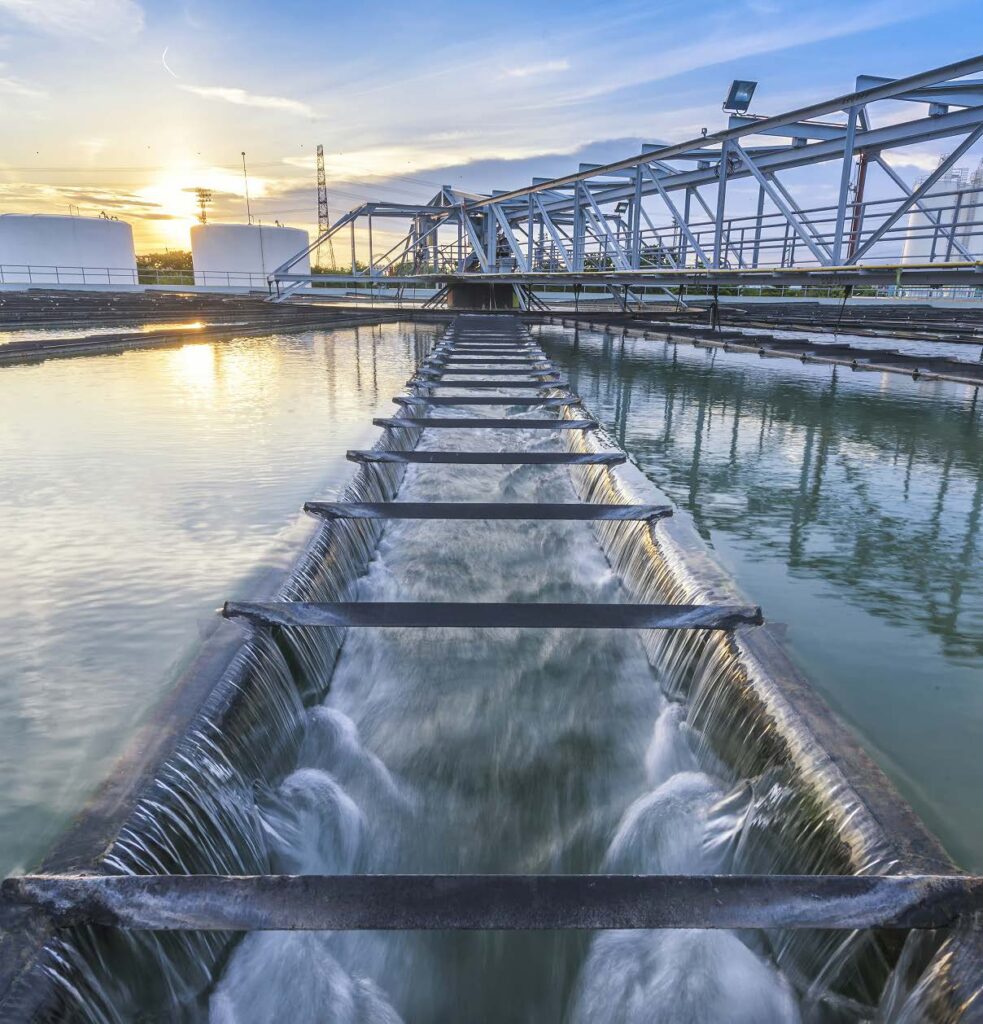 From treatment plants and reservoirs to pumping systems and desalination equipment, South Africa’s expanding water infrastructure programme presents a major opportunity for local stainless steel manufacturers…
South Africa’s commitment of more than R156-billion in public funding for water and sanitation infrastructure over the next three years places the country’s water challenge at the centre of its infrastructure and industrial development agenda. Announced as part of government’s 2026 programme, the funding is complemented by a R54- billion incentive for metropolitan municipalities to reform and improve their water, sanitation and electricity services.
For South Africa’s stainless steel sector, this represents a substantial potential market. New and upgraded treatment plants, wastewater facilities, pumping stations, reservoirs, bulk water networks and desalination projects require materials capable of operating reliably for decades under conditions involving corrosion, continuous moisture, chemical exposure and fluctuating water quality. Stainless steel’s corrosion resistance, strength, durability and relatively low maintenance requirements can extend infrastructure life, reduce downtime and lower the total cost of ownership.
A substantial national project pipeline
The public funding commitment is supported by major bulk water projects already under construction or moving towards implementation. The 2026 Budget Review places the revised capital investment in Phase 2 of the Lesotho Highlands Water Project at R53.3-billion, with the Trans-Caledon Tunnel Authority having raised R24-billion towards the Polihali Dam, transfer tunnel and associated infrastructure.
Other developments include the R24-billion uMkhomazi Water Augmentation Project and the R12.3-billion second phase of the Mokolo-Crocodile River Water Augmentation Project, which is expected to supply about 75-million cubic metres of water annually. The Department of Water and Sanitation has also reported that major national projects representing about R130-billion in investment have been unblocked and are being implemented, with much of the funding coming from private-sector sources.
Municipal and regional projects add further depth. Water infrastructure grants announced for 2026/27 include four bulk schemes worth R2.24-billion in the Chris Hani district, the R2-billion Loskop Regional Bulk Water Supply Scheme, the R1.1-billion George Water Supply Project and North West schemes collectively valued at more than R2.3-billion.
These figures confirm that the opportunity is no longer hypothetical. South Africa has a real pipeline capable of generating demand for stainless steel plate, sheet, pipe, tube, fittings, bar and fabricated equipment.
Water infrastructure depends on materials that last
Water assets must operate continuously and safely, often for several decades. Material selection is therefore both an engineering and financial decision, particularly in facilities exposed to chlorides, treatment chemicals, wastewater contaminants and coastal conditions. The lowest-cost material at construction is not necessarily the most economical over the asset’s life, as coating replacement, corrosion damage, leaks and premature failure can increase operating costs and disrupt essential services.
Stainless steel offers a strong lifecycle proposition where corrosion resistance, hygiene and structural integrity are critical. It can be used selectively in the most aggressive areas or more extensively where maintenance access is limited and reliability is a priority.
Typical applications include:
- Treatment and wastewater facilities, pumping stations and reservoirs
- Storage tanks, process vessels, pipework and pipe spools
- Filtration, screening, clarifier and aeration systems
- Desalination and chemical-dosing equipment
- Pumps, valves, fittings and flow-control equipment
- Platforms, walkways, handrails, gratings and structural supports
The appropriate grade depends on water chemistry, temperature, chloride concentration, chemical exposure and mechanical requirements. Grades 304 and 304L may suit less aggressive environments, while 316L is frequently considered where improved chloride resistance is required. Duplex and higher-alloyed grades can provide additional strength and corrosion resistance in demanding coastal and desalination applications. Specialist advice is essential: under-specification can cause premature failure, while unnecessary over specification can undermine project competitiveness.
A broad market for stainless steel products
Water infrastructure creates demand across numerous product forms: plate and sheet for tanks and vessels; pipe and tube for conveyance and process systems; bar and machined components for pumps and valves; and sections, gratings and fasteners for supporting structures.
A pump-station upgrade may require modest quantities, while a large treatment, wastewater or desalination facility could consume hundreds or potentially thousands of tonnes across its equipment and supporting infrastructure.
The full opportunity lies in the cumulative effect of multiple projects. A sustained national pipeline would provide more predictable demand over several years, allowing fabricators to invest in machinery, develop specialist skills, take on apprentices and improve production processes with greater confidence. The commercial value also extends beyond the metal itself, as stainless steel gains value through cutting, forming, machining, welding, polishing, testing, assembly, installation and commissioning.
Localisation determines the industrial value
The greatest economic benefit will be achieved if water programmes deliberately increase the participation of capable South African manufacturers. Local companies can produce treatment tanks, process vessels, pipe spools, pump components, filtration systems, access structures, screens, gratings, specialised fittings and skid-mounted assemblies.
Some proprietary technologies may still need to be sourced internationally, but these can often be separated from structural and mechanical components that can be manufactured locally or under licence. This would allow domestic businesses to move progressively from replacement parts and simpler components into complete assemblies, equipment packages and locally engineered systems.
Greater localisation would also reduce dependence on imported spares, long lead times and exchange-rate volatility. Importing complete systems transfers manufacturing value offshore, whereas local production retains expenditure across mills, service centres, fabricators, consumable suppliers, engineering companies, testing businesses, logistics providers and maintenance contractors. Early engagement with suppliers is therefore critical to identifying the work packages South African companies can deliver competitively.
Employment beyond construction
The stainless steel value chain is estimated to support about 20 000 to 25 000 direct jobs and is more labour-intensive per tonne than many conventional carbon steel activities because of the technical processes required to produce finished equipment. Water investment would create work Water infrastructure depends on materials during design, fabrication and construction, but treatment plants, pumping stations and wastewater facilities also require inspection, repair and component replacement throughout their operating lives.
The resulting demand could support coded welders, fabricators, boilermakers, pipe fitters, CNC operators, draughtspeople, engineers, project managers, quality inspectors, corrosion specialists, instrumentation technicians and maintenance personnel. A sustained pipeline would help companies retain experienced artisans while creating workplace opportunities for apprentices, engineering graduates and technicians.
Raising engineering and manufacturing capability
Water projects are technically demanding. Components must meet strict requirements relating to pressure, structural integrity, weld quality, corrosion performance, dimensional accuracy and long-term reliability, while modern treatment systems increasingly incorporate automation, instrumentation and remote monitoring.
A larger domestic pipeline could encourage investment in automated welding, precision forming, CNC machining, orbital tube welding, non-destructive testing and advanced quality systems. It could also help manufacturers acquire the certifications and references needed to enter international infrastructure markets. These capabilities are transferable to food and beverage processing, mining, chemicals, pharmaceuticals and energy.
For Sassda and its members, this underlines the importance of early involvement in project planning. Guidance on grade selection, fabrication, corrosion risk and lifecycle costs can ensure stainless steel is specified where it provides the greatest long-term value.
Water security is an economic enabler
Reliable water infrastructure supports agriculture, food processing, mining, tourism, residential development and virtually every form of industrial activity. Effective wastewater treatment is equally important to protecting resources, meeting environmental requirements and enabling urban and industrial expansion.
Stainless steel-intensive water systems can therefore deliver a dual benefit: direct demand for materials, fabrication, engineering and maintenance, and wider productivity gains made possible by improved water security. In areas where unreliable supply or insufficienttreatment capacity constrains development, an upgraded reservoir, pumping station or treatment plant can unlock economic activity far beyond the project boundary.
Building an African export platform
South Africa’s water challenge is shared across the continent. Urbanisation, industrial growth and climate pressure are driving demand for treatment plants, pumping systems, storage infrastructure and decentralised water solutions. Local companies that build strong domestic experience could use it to supply stainless steel equipment, replacement parts and engineering services elsewhere in Africa, turning public infrastructure projects into technical references and an export platform.
Turning water investment into industrial growth
The investment pipeline will not automatically translate into a stronger local stainless steel industry. Realising its full value will require accurate specifications, early engagement with manufacturers, practical local-content requirements and procurement models that evaluate lifecycle performance rather than initial price alone. Large contracts should also distinguish between specialised imported technology and the components South African companies can produce competitively, with accessible work packages enabling more local fabricators and engineering SMEs to participate.
Water is one of South Africa’s most strategic resources, and the infrastructure used to capture, treat, transport and protect it is equally important. With more than R156- billion in public funding committed over three years and major projects already moving into implementation, the opportunity is significant. The right procurement and localisation approach can turn this programme into sustained stainless steel demand, stronger domestic manufacturing, scarce-skills development and a more resilient industrial economy.