

Congo: Opportunity, Infrastructure and the Next Frontier for Stainless Steel Growth
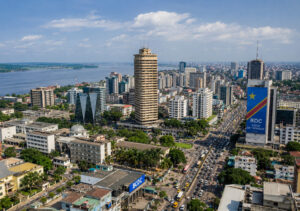
As Africa’s infrastructure and industrial development agenda continues to accelerate, the Democratic Republic of the Congo (DRC) is increasingly positioning itself as one of the continent’s most strategically important growth markets.
Rich in natural resources, geographically significant and home to a rapidly expanding population of more than 124 million people, the DRC represents both immense opportunity and considerable complexity for manufacturers, infrastructure developers and industrial suppliers operating across Africa.
For South Africa’s stainless steel industry, the country’s growing pipeline of energy, infrastructure, transport, fuel logistics and urban development projects presents significant long-term potential across multiple stainless steel-intensive sectors.
While challenges around political stability, logistics, funding and infrastructure remain ongoing realities, major investment initiatives currently under way suggest the DRC could become one of Africa’s most important future industrial and infrastructure growth stories.
Power Ambitions
One of the most closely watched developments is the renewed momentum around the long-delayed Inga 3 hydropower project, a development with potentially transformative implications not only for the DRC, but for regional energy security across Southern Africa. Valued at more than $10-billion, the project has re-emerged as South Africa and the DRC resume discussions around future electricity supply agreements.
The first phase of the project is expected to generate approximately 11 000 MW of electricity, with South Africa reportedly seeking to increase its future import allocation from 2 500 MW to 5 000 MW.
Key project highlights include:
- Initial generation capacity of approximately 11 000 MW
- Proposed increase in South Africa’s power allocation to 5 000 MW
- More than $1-billion in World Bank support already committed
- Significant future demand for industrial, energy and water infrastructure
- Potential downstream opportunities across piping, fabrication and processing systems
Large hydroelectric developments also require extensive long-life infrastructure capable of operating within demanding environmental conditions where stainless steel often provides significant lifecycle advantages through durability, corrosion resistance and reduced maintenance requirements.
Urban Transformation
Alongside major energy projects, the DRC is also pursuing large-scale urban infrastructure and municipal development initiatives.
In April 2026, the World Bank approved $250-million in financing for the Kinshasa Urban Transformation and Jobs Programme, known as Kin la Belle.
The initiative aims to improve solid waste management services while simultaneously creating inclusive employment opportunities within Kinshasa, one of Africa’s fastest-growing urban centres.
The project reflects the growing recognition that rapidly urbanising African cities require substantial investment in sanitation, waste management, drainage and municipal infrastructure systems.
According to the World Bank, the programme is expected to contribute towards cleaner urban environments, flood mitigation and long-term employment creation.
For stainless steel suppliers and fabricators, urban infrastructure upgrades often create demand for products and systems linked to waste handling, water management, transport infrastructure, processing equipment and public infrastructure projects where durability and corrosion resistance are increasingly important considerations.
As African cities continue expanding, demand for longer-life, lower-maintenance materials is expected to become increasingly important in reducing lifecycle infrastructure costs.
Fuel Infrastructure
The DRC is simultaneously investing heavily into fuel logistics and energy distribution infrastructure as government seeks to improve supply reliability across several underserved provinces.
According to plans announced by the country’s hydrocarbons ministry, major priorities include pipeline construction, upgraded storage depots, improved waterways logistics and national road rehabilitation programmes aimed at strengthening fuel distribution networks.
Key focus areas include:
- Expansion of pipeline infrastructure
- Upgrades to fuel storage depots
- Rehabilitation of strategic transport routes
- Improved waterways logistics systems
- Development of a proposed 50 000 t strategic fuel reserve
- Expansion of fuel retail infrastructure into underserved markets
The government is also investigating the establishment of a 50 000 t strategic fuel reserve to improve resilience against global supply disruptions.
These projects have significant implications for stainless steel-intensive sectors linked to fuel storage, tank fabrication, piping systems, logistics infrastructure and specialised industrial applications.
In many fuel handling and storage environments, stainless steel plays a critical role due to its resistance to corrosion, long operational lifespan and suitability for demanding industrial conditions.
The DRC’s efforts to improve transport and logistics systems are also expected to support broader industrial development and regional trade connectivity over time.
Regional Potential
Beyond individual projects themselves, the DRC’s broader significance lies in its long-term industrial growth potential and regional influence.
The country’s population scale, resource base and infrastructure requirements create substantial opportunities across sectors including mining, water infrastructure, energy, transport, manufacturing, food processing and fuel logistics.
For South African stainless steel manufacturers and fabricators, the DRC represents a market where future demand could increasingly emerge for:
- Stainless steel piping systems
- Water and wastewater infrastructure
- Fuel storage and processing equipment
- Industrial fabrication and structural applications
- Food processing and hygienic manufacturing systems
- Mining and materials handling infrastructure
- Architectural and urban infrastructure applications
Importantly, many of these sectors align closely with stainless steel’s long-term strengths around durability, recyclability, hygiene performance and lifecycle cost efficiency.
Growth With Complexity
At the same time, operating within the DRC still requires careful navigation of infrastructure constraints, political risk, logistics complexity and funding challenges. Several of the country’s largest projects continue to face lengthy implementation timelines, financing requirements and execution risks.
However, despite these realities, momentum around infrastructure investment continues building.
For Africa’s stainless steel sector, the DRC increasingly represents more than simply a resource-rich economy. It is emerging as a long-term infrastructure growth market where energy, urbanisation, transport and industrial development are beginning to converge at scale.
As regional integration and infrastructure investment accelerate across Africa, countries such as the DRC could play an increasingly important role in driving future demand for stainless steel-intensive infrastructure, industrial systems and manufacturing solutions.