

Innovation, Accountability & the Future of Stainless Steel
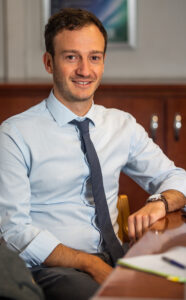 As Operations Director at NDE Andrew Campbell brings an unusual blend of engineering training, entrepreneurial thinking and real-world project experience to the stainless steel sector. Having started his career in renewable energy, project finance and infrastructure development, he entered the metals industry during one of its most turbulent periods, navigating market volatility, Covid-19 disruption and rapidly shifting global demand conditions. Today, Campbell plays a central role in helping NDE support customers across the stainless steel value chain, while offering thoughtful insight into material innovation, industry collaboration and the long term future of South African manufacturing…
Please share a bit about your background, including where you grew up, your schooling and tertiary education and how you first entered the stainless steel industry.
I went to school in Johannesburg and then attended university in Cape Town, where I studied Mechanical Engineering. During my third year at UCT, I realised I might need to pivot towards something more orientated toward the business and project management side of engineering. Once I completed my undergraduate engineering degree, I therefore pursued a postgraduate degree in Entrepreneurship.
I started as an intern at a venture capital fund, which placed me within its online pharmacy startup. I then spent five years in the solar industry working in project finance, mergers and acquisitions, and contract management before eventually joining NDE. It has certainly been an unusual path!
Looking back on your career so far, what are some of the key projects, roles or experiences that challenged you the most, while also helping to shape your technical skills, leadership approach and career growth?
During my time at Sonnedix, the solar IPP, we had to submit incredibly complicated bids to the Department of Energy as part of the REIPPPP programme. During these periods, we often had extremely intense weeks of negotiations with banks, developers, EPCs and other stakeholders. Sixteen hour days leading up to bid submissions or financial close were common.
I was also involved in mergers and acquisitions deals, which were always challenging because of the need to balance expectations across all parties to get transactions over the line. In addition, I worked alongside our EPC contractor during the construction of a solar power plant in the Northern Cape. It was a massive infrastructure project with tight timelines and required extensive co-ordination and teamwork across stakeholders.
Then I entered the stainless steel industry. I started at NDE in 2019, which was already a difficult year for the industry, before we moved straight into Covid-19 lockdowns, followed by a frenetic period driven by commodity prices and post-pandemic demand. The metals industry is a wild place. I often ask colleagues if this is the worst it has ever been, and they usually just smile and show me their battle scars. We are part of an incredibly resilient industry.
All of these experiences contributed to developing my skills. At the time, it is not always enjoyable, but looking back I am grateful to have experienced them. Especially when you are starting out and still have the energy and flexibility to pull all-nighters and travel extensively to get things done.
These environments also teach you the value of teamwork, diverse skill sets and camaraderie during difficult periods. I would particularly highlight the opportunity I have had to work with experienced and exceptionally talented people across different industries. That has fundamentally shaped, and continues to shape, my career.
What would you say are the biggest lessons you’ve learnt so far, both professionally and personally?
Professionally, I would highlight the following:
- The power and importance of relationships continue to grow.
- Sometimes tasks can feel overwhelming, but breaking them down into smaller steps helps.
- Lean into your team and genuinely listen to what people have to say. Surround yourself with good people and you will get good ideas and valuable input.
- Some decisions need to be made quickly, but most important decisions do not.
- You will never have complete certainty, so do not wait for it.
- An honest and clear narrative around what and why you are doing something is incredibly important because it helps bring people along with you.
Personally:
- I have come to deeply appreciate the value of role models and experienced people who are generous with their time and knowledge.
- Since entering the stainless steel industry, I have realised how much I admire the work our industry does. As a semi-successful, or perhaps failed, engineer depending on your perspective, I remain constantly impressed by what our customers and the industry achieve.
- Often, when you are honest and approachable as a person or company, the industry responds in the same way.
- Although stressful periods are never enjoyable at the time, they often teach you a great deal about yourself and your resilience.
- Keep your sense of humour. In serious situations, where everyone already understands the gravity of the moment, there is often no need to add further tension.
What is your current role at NDE and what does a typical day look like for you?
I am the Operations Director for NDE. It is a highly varied role that moves across most aspects of the business. Essentially, I try to determine how we can assist our branches in solving pressing issues while also finding ways to empower them to service customers more effectively.
This ranges from sales and procurement to warehousing, administration and finance. The best way I can describe it is acting as the grease between the gears. Personally, my biggest passion within all of this is the reporting and data side of the business.
Given NDE’s role in supplying stainless steel, aluminium and corrosion-resistant solutions, how do you see the company helping customers make the right material choices, improve quality and support more efficient project delivery across the local stainless steel value chain?
If I am completely honest, I do not think distributors necessarily have significant sway in material selection. Of course, we are always happy to assist where needed and our company has extensive knowledge and experience to offer. However, I believe the industry, and most engineers, already understand the role these materials can play. They may not know every specific grade, but they certainly understand the broader advantages and lifecycle considerations.
A topical example would be SpaceX and Starship, where the outer shell now comprises 300-series stainless steel. The material was always recognised as a viable material for spacecraft, yet Starship was the first major example of its use in this way. When you hear the design story behind it, much of it comes down to engineers being given the freedom to try something new, combined with a decisionmaker willing to shoulder the risk of moving away from tradition.
In our local market, engineers and fabricators should ideally have more flexibility to change material designs in pursuit of longer design lives and improved performance. Unfortunately, many material decisions are still driven primarily by immediate cost, material accessibility and speed. In an uncertain world, it can be difficult to motivate for longer lifecycle considerations.
For NDE and the broader distributor network, material availability and pricing remain important factors. When projects move into more specialised material choices, stock is often not readily available locally. However, customers and end-users are not always aware of how quickly we can source specialised grades internationally, and increasingly through dynamic local suppliers as well.
From your experience, how important are skills development and technical expertise to the successful application of stainless steel in key industrial projects? Are there any specific skills gaps or growth opportunities you believe the industry should be focusing on?
Again, I do not necessarily believe this is purely a skills issue. In many cases, it is more of a structural challenge within the industry and the way turnkey projects are broken up and contracted out.
There are often too many layers between contract initiators, design houses, fabricators and the distribution network that ultimately has to source and stock material. Material specification changes frequently require buy-in across this entire chain.
For example, a particular steel grade may initially be specified for a chemical pipeline. Someone within the chain may realise that switching to stainless steel could significantly improve the operating lifecycle, but the material cost would be higher. That contractor may suggest the change to the engineering house, which then has to motivate it to the client. This can lead to a larger capital outlay requiring approval from investment committees and other decision-making structures. In many instances, maintenance contracts and teams are also separate from capital equipment teams, which adds another layer of complexity.
As a result, it becomes difficult to get all stakeholders aligned on the value of a specification change, and the original design material is often retained.
The solution lies in creating better forums and neutral spaces where successful material choices and case studies can be openly discussed and understood, despite commercial sensitivities.
Interestingly, some of the most exciting innovations often come from smaller fabricators and manufacturers whose focus is on delivering a working solution or product rather than executing against a predefined design. They sometimes have the flexibility to make bold decisions around switching to specialised stainless steel or aluminium grades that ultimately improve product performance.
Taking a broader view, what do you see as the biggest challenges currently facing the South African stainless steel industry, and what practical or innovative solutions could help address them?
Beyond the obvious demand challenges facing the industry, driven by both policy and global shocks, I believe one of the biggest issues is the training and development of artisans.
I would not place blame on any single area. It has simply become increasingly difficult for specialised centres, private companies and public institutions to sustain these programmes independently.
In my view, this presents a major opportunity for organisations such as Sassda to step in. There is potential to build a funding pool that could support artisan training schools for boilermakers, fitters, turners and related trades. This would not only benefit South Africa’s manufacturing sector but could also support contributing members through structured training initiatives if implemented correctly.
Which developments or innovations in stainless steel are you most excited about at the moment, and which industries or sectors do you believe hold the greatest future potential for stainless steel applications?
I find the work our customers do incredibly interesting and exciting. I am constantly impressed by what the industry is capable of producing.
In terms of future sectors, I believe developments in pharmaceuticals, particularly those being accelerated through AI-assisted breakthroughs, will have significant downstream impacts on manufacturing capacity requirements. We are already seeing some of this within the GLP-1 inhibitor market.
I am also hopeful that South Africa’s mining industry could benefit from a long-term revival linked to copper and platinum group metals demand associated with computing and electric vehicle markets.