

Experience, Integrity and the Future of Stainless Steel
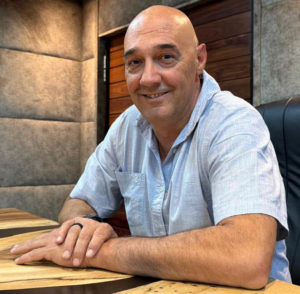 Daryll Croft’s career in the stainless steel industry spans more than two decades, beginning on the production floor and progressing through production planning, industrial sales and senior management. Today, as Sales and Operations Director for Euro Steel Johannesburg, he oversees the full business cycle, from procurement and warehouse logistics to sales and customer service. His experience has given him a practical understanding of the challenges facing South Africa’s stainless steel sector, including global competition, supply-chain constraints and the need for specialised skills. In this profile, Croft reflects on his career, the lessons he has learned and the opportunities shaping the industry’s future…
Please outline your background, including your education and how you entered the industry?
I was born in Port Elizabeth and moved to Gauteng at a young age to complete my schooling. My commitment to professional development later led me to pursue part-time finance and management studies, including a Management Development Programme through the University of Stellenbosch, followed by an advanced strategic management course at INSEAD Business School in France.
I began my career on the production floor, working night shifts on a cut-to-length line for a carbon steel company in Springs. From there, I moved into production planning before making the transition into industrial sales. My introduction to stainless steel came when I was approached by Stalcor. Although I had limited knowledge of the product at the time, the eight years I spent there were highly formative. I benefited enormously from the guidance and mentorship of experienced people in the industry. In 2003, I joined Euro Steel, a move that has shaped the course of my career.
What are some of the key work experiences or projects that have challenged you, shaped your skills and influenced your career?
The most significant challenge has been adapting to the changing dynamics of global trade, particularly the arrival of high-quality, competitively priced stainless steel products from China. Earlier in my career, market pricing was more stable and local competition was less intense. Operating in today’s far more competitive environment requires constant strategic thinking to ensure that both Euro Steel and our customers remain competitive and resilient.
What would you say are the biggest lessons you’ve learnt so far professionally, and personally?
Professionally, I have learned that people are an organisation’s greatest asset. A business can only succeed if it has a strong, capable team behind it.
Personally, I have learned that the stainless steel industry is a close-knit community. Professionalism, integrity and cordiality matter. Relationships endure, and it is important to maintain them as people move between companies and take on new roles over the course of their careers.
What is your current position, and what does a typical day in your role involve?
As Sales and Operations Director for Euro Steel’s Johannesburg office, I oversee the full business cycle. My responsibilities include warehouse logistics, sales performance and strategic procurement. Being involved in every aspect of the operation gives me a direct understanding of the challenges faced by our teams on the frontline. That insight helps me improve processes, encourage innovation and maintain a strong, service-oriented culture.
From your vantage point in the stainless steel supply chain, what changes are you seeing in how South African manufacturers source and use stainless steel?
We are seeing a shift away from domestic sourcing towards imported alternatives, as well as an important change in the mining sector. Industrial applications are increasingly moving beyond standard austenitic grades such as 304 and 316, with wider plate in duplex and super-duplex grades being used where greater durability is required.
The main operational challenges remain domestic logistics, particularly the inefficiencies at our ports and on the rail network. These make inventory management and the optimisation of working capital more difficult. At the same time, there is considerable opportunity to expand into African markets through carefully selected regional partnerships. That growth must be approached with an understanding of the risks involved, as cross-border regulatory requirements and governance standards can differ significantly from those in South Africa.
In your experience, how important is skills development and technical knowledge to the successful use of stainless steel in African industrial projects?
The stainless steel sector is highly technical and metallurgical. At Euro Steel, we regard technical competence as a basic requirement, not an optional extra. We need people who combine a sound understanding of metallurgy with commercial judgement. That combination is essential if we are to support the long-term development and sustainability of industrial infrastructure across Africa.
At a broader level, what do you see as the biggest challenges facing South Africa’s stainless steel industry, and what practical or innovative approaches could help address them?
The stainless steel sector is not insulated from the broader socioeconomic and institutional challenges facing South Africa. At Euro Steel, our response is to place accountability at the centre of the business, from the executive level down. We believe in leading by example and building a culture based on ethical behaviour, transparent decision making and consistent compliance with the law and applicable regulations.
What developments or innovations in stainless steel stand out to you and which sectors do you think offer the greatest potential for future growth?
The global stainless steel industry is being shaped by three powerful forces: decarbonisation, pressure to improve cost efficiency and the need for materials that can perform in increasingly demanding environments. The move towards net-zero emissions is accelerating the adoption of lower carbon manufacturing methods, including hydrogen based reduction processes that could reduce reliance on traditional coking coal, and electric arc furnaces powered by renewable energy.
Stainless steel is also 100% recyclable without losing its structural integrity. As environmental requirements become more demanding, mills are therefore looking closely at how they can increase the proportion of scrap used alongside primary material.
Looking ahead, rapid urbanisation will create growing demand for infrastructure that is durable and efficient to maintain. Municipal utilities, including desalination plants, wastewater treatment facilities and bulk fluid transport pipelines, are increasingly turning to stainless steel because it can help prevent leakage and reduce maintenance costs over the life of an asset.