

Duplex Stainless Steel: The High-Performance Workhorse of Modern Industry
For decades, engineers selecting stainless steel had relatively few options. Austenitic grades such as 304L and 316L dominated the market, while ferritic grades offered a lower-cost alternative for less demanding applications. As industries sought materials with greater strength, longer service life and improved corrosion resistance, a family of stainless steels emerged to bridge the gap: duplex stainless steel.
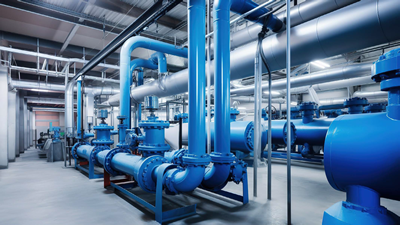
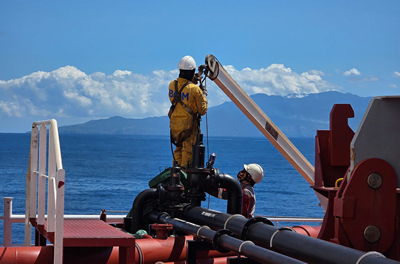
Today, duplex stainless steels are widely used in water treatment plants, mining operations, offshore platforms, desalination facilities and chemical-processing installations. Their growing popularity reflects a distinctive combination of corrosion resistance, mechanical strength and lifecycle value that conventional stainless steels can struggle to match. Duplex stainless steel, however, is not a single material. It is a family with different performance levels, and selecting the right grade is critical. The wrong choice can mean unnecessary cost or premature failure; the right one can deliver decades of reliable service.
A Unique Microstructure
The name “duplex” refers to the material’s two-phase microstructure. Unlike conventional stainless steels, which are predominantly austenitic or ferritic, duplex grades contain approximately equal proportions of both phases. The resulting structure combines the strengths of each. The ferritic phase contributes strength, dimensional stability and resistance to stress corrosion cracking, while the austenitic phase provides toughness, ductility and strong corrosion resistance. Together, these characteristics give duplex stainless steels a balance of properties not found in conventional grades.
- The performance of duplex stainless steels stems from carefully controlled alloy chemistry. Chromium is the most important alloying element, forming the passive layer that gives stainless steel its corrosion resistance. Molybdenum improves resistance to pitting and crevice corrosion,
particularly in chloride-containing environments, while nitrogen contributes to both strength and corrosion resistance. - As the family progresses from lean duplex to standard duplex and then to super duplex grades, the levels of chromium, molybdenum and nitrogen generally increase. This helps explain the marked improvement in corrosion resistance across the duplex range. Lean duplex grades such as 2304 typically contain about 22% chromium, with relatively modest additions of nickel and molybdenum. Standard duplex 2205 has higher nickel and molybdenum levels, while super duplex grades such as 2507 contain around 25% chromium, together with significantly higher levels of molybdenum and nitrogen. This highly alloyed chemistry enables super duplex to perform reliably in some of the most aggressive chloride environments found in industry.
- One of the most striking features of duplex stainless steels is their strength. Conventional austenitic grades such as 304L and 316L typically have minimum yield strengths of about 200 MPa. By comparison, lean duplex grades commonly exceed 400 MPa, standard duplex 2205 has a minimum yield strength of about 450 MPa, and super duplex grades exceed 550 MPa. This strength gives engineers valuable design options. Components can often be made with thinner sections while still meeting structural requirements, reducing weight and material use and, in many cases, lowering total project costs. The savings can be substantial in large structures such as tanks, pressure vessels and processing equipment.
- Duplex stainless steels also generally offer better fatigue performance than conventional austenitic grades. This makes them attractive for applications subject to cyclic loading, vibration or fluctuating stresses.
The Three Duplex Grade Groups
Although duplex stainless steels are often discussed as one category, they are more accurately understood as three distinct groups.
- Lean duplex grades were developed as economical alternatives to 316L stainless steel. They offer significantly greater strength, with corrosion resistance broadly comparable to, and in some environments slightly better than, 316L. These grades are attractive for structural applications, water storage systems and general infrastructure projects where chloride levels remain relatively moderate.
- Standard duplex 2205 is widely regarded as the workhorse of the duplex family. It offers an effective balance of corrosion resistance, strength, weldability and cost. For many water treatment, mining and chemical-processing applications, 2205 provides a strong engineering solution. Where 316L approaches its corrosion limits, 2205 is often preferred.
- At the top end of the range are the super duplex grades. These highly alloyed materials were developed for demanding environments, including seawater systems, offshore platforms, desalination plants and aggressive chemical-processing installations. Their higher chromium, molybdenum and nitrogen content provides exceptional resistance to pitting, crevice corrosion and chloride stress corrosion cracking.
Why Material Selection Matters
A common mistake in materials engineering is to assume that the highest-performance alloy is automatically the best choice. Duplex stainless steels are application-specific materials.
A municipal water reservoir may achieve a 40-year design life using lean duplex or standard duplex stainless steel. Specifying super duplex could add considerable cost without delivering meaningful additional value. Conversely, choosing a lean duplex grade for a seawater desalination plant could lead to premature corrosion and expensive maintenance.
Successful material selection requires a thorough understanding of the operating environment. Chloride concentration, operating temperature, process chemistry, mechanical loading and design life all need to be considered. The best engineering solution is rarely the most expensive material. It is the material that delivers the required service life at the lowest total lifecycle cost.
Looking to the Future
As industries focus increasingly on sustainability, durability and lifecycle economics, duplex stainless steels continue to gain importance. Their combination of high strength and strong corrosion resistance enables engineers to design lighter structures, reduce material use and extend service life. In wastewater treatment plants, mining equipment, pharmaceutical facilities and offshore infrastructure, duplex stainless steels demonstrate that long-term performance depends not simply on choosing stainless steel, but on choosing the right grade for the application.
The value of duplex stainless steel lies not only in its metallurgy, but also in its ability to provide reliable service for decades when the right grade is matched to the right environment. For designers, engineers and asset owners, understanding those differences is key to unlocking the potential of this family of materials.