

CSIR develops local 316L stainless steel powder for additive manufacturing

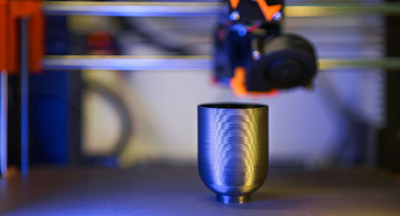
The Council for Scientific and Industrial Research (CSIR) has produced spherical 316L stainless steel powder for additive manufacturing, identifying the material as an immediate commercial focus for its ultrasonic atomisation facility.
The development could help reduce South Africa’s reliance on imported metal powders and strengthen local advanced manufacturing. It also shows how the CSIR’s Future Production: Manufacturing Cluster is connecting research and technical capabilities with industry needs, with the Southern African Stainless Steel Development Association (SASSDA) facilitating engagement with the sector.
The CSIR has characterised the powder and demonstrated its suitability for additive manufacturing by producing 3D-printed components, including a polishing tool and mechanical test specimens. Moving from demonstration to wider industrial use will require consistent quality, qualification against international specifications, reliable local feedstock and commercially viable production volumes and costs.
CSIR Future Production: Manufacturing Cluster Manager Dr Luyolo Mabhali explains, “Our engagement with SASSDA is helping us understand the capabilities and needs of the stainless-steel industry, so that the Manufacturing Cluster’s work can respond to real opportunities for localisation and industrial application.”
Sassda Market Intelligence and Lobbying Specialist Tebogo Nkwe adds, “An industry association can help ensure that technology development is informed by the needs of manufacturers and grounded in the realities of the market. By connecting the CSIR with foundries and other industry players, Sassda can help identify practical interventions that support.”
Collaboration connects research with industry
Sassda has facilitated engagement between the CSIR and several stainless-steel industry players and foundries. The discussions are helping the CSIR build a better understanding of local foundry capabilities and identify opportunities to strengthen the sector.
This engagement helps ensure that technology development responds to real manufacturing challenges and market needs. Industry associations can provide access to technical expertise, industry data, foundries, customers and wider stakeholder participation, helping identify practical interventions for localisation and improved competitiveness.
The collaboration forms part of the CSIR’s Manufacturing Cluster’s strategy, which aims to strengthen the competitiveness and resilience of South African manufacturing through localisation, industrial innovation and the development of high-value technologies that can be supported locally.
The cluster brings together four capability areas: advanced materials and manufacturing; robotics and future production; photonics; and industrial sensors. Its capabilities include materials development and testing, metal processing, additive manufacturing, automation, digital manufacturing, sensing and monitoring.
The CSIR’s priorities focuses on strategic sectors where localisation and industrial modernisation could make the greatest impact. These include automotive and new-energy mobility, rail, advanced materials and metals, aerospace and defence, medical devices, industrial machinery, and smart and sustainable manufacturing. Across these sectors, the focus is on strengthening local supply chains, developing future-ready skills and improving production.
From powder to industrial application
The CSIR brings specialised expertise, research infrastructure and technology development capabilities to the initiative, including mechanical testing laboratories and specialised testing and manufacturing facilities. Its role is to help manufacturers address industrial challenges by developing and de-risking technologies, testing and validating materials and components, demonstrating solutions, and creating pathways for technology transfer.
The cluster is also exploring opportunities for greater local processing, recycling and reuse of stainless steel including scrap utilisation, metal recycling, materials recovery, resource efficiency, waste reduction and energy-efficient manufacturing.
In the powder project, off-specification material generated during processing could potentially be recovered and reused rather than disposed of. Scaling this and other localisation opportunities will depend on a clear market need, secure raw-material supply, appropriate industry partnerships, defined product specifications and applications, and a commercially viable approach to production.
The CSIR aims to move more locally developed technologies beyond research and demonstration into industrial application. It says progress will be measured through technologies demonstrated, licensed or transferred to industry, joint technology development agreements, support for small, medium and micro enterprises, industrial adoption, and stronger use of the cluster’s technology platforms and facilities.